Revspire blog
The Complete 2026 Guide to Consensus Building in B2B for Revenue Leaders
A practical guide for B2B revenue leaders on building consensus through ownership, stakeholder mapping, meaningful metrics, deal coaching, and feedback loops.
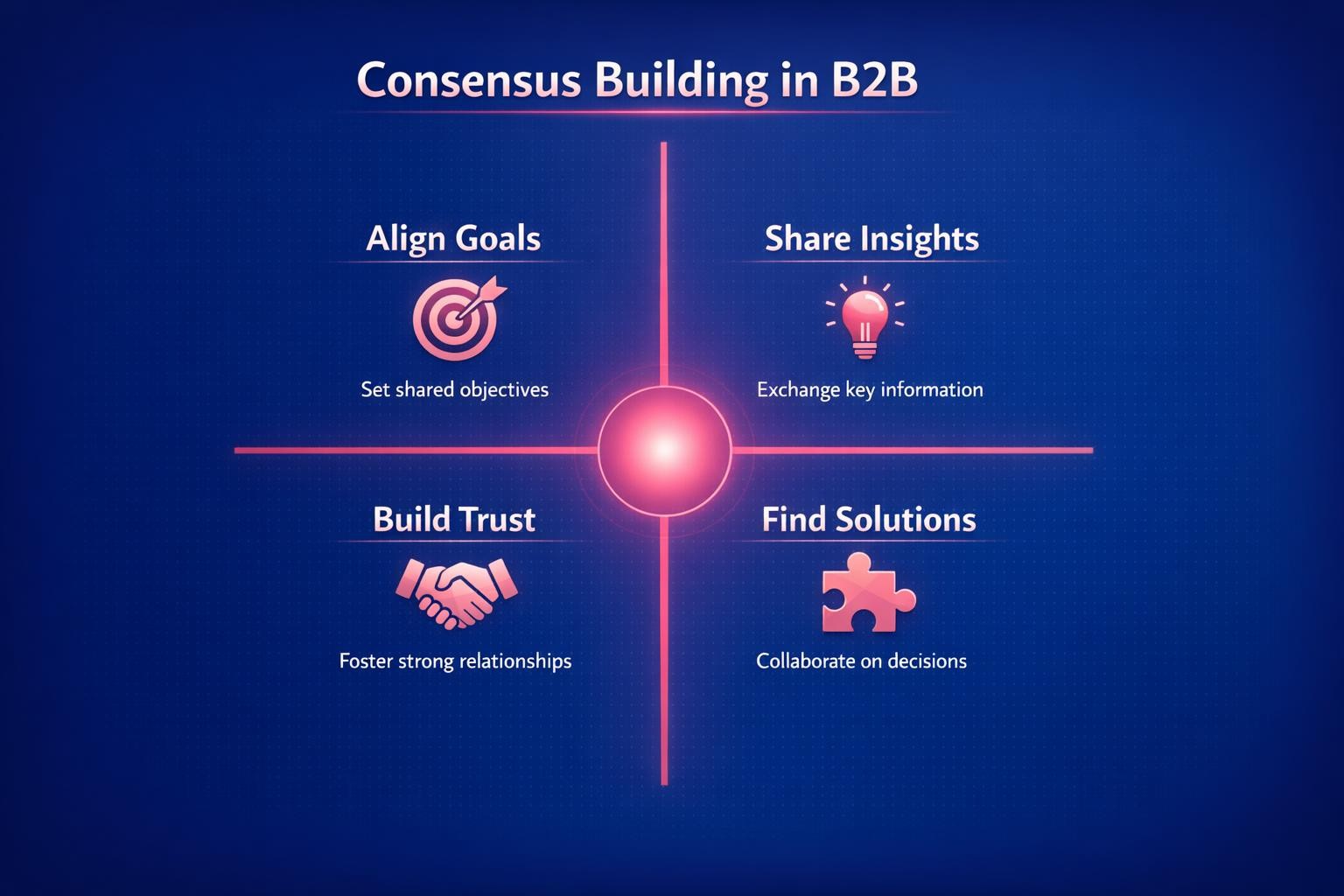
Consensus building is an ongoing operating discipline for revenue teams. A documented approach, clear ownership, connected technology, meaningful metrics, deal-level coaching, and structured feedback can help teams manage the buying-group process more consistently.
For an overview of how deal rooms support the process, explore Revspire Buyer Enablement.
Build the operating foundation
Assign ownership
Someone on the leadership team should be accountable for outcomes, not just activities. That owner can set goals, define metrics, coordinate enablement, and keep the operating model current.
Document the process
An operating model for Consensus Building in B2B answers three questions: what actions should happen, at what stage, and who is accountable.
Define clear milestones, documented criteria, and a shared vocabulary. Review the playbook as the team learns from completed deals and buyer feedback.
Align technology and data
The technology layer for Consensus Building in B2B should reduce friction, not add it. Technology should serve the consensus building B2B buying group process, not define it.
Evaluate each tool by whether it supports a more consistent process. Where possible, data should flow between the CRM, engagement platform, and deal room without duplicate manual updates.
Put the framework into practice
Audit the current state
Before you can improve Consensus Building in B2B, you need an honest baseline.
Review opportunities by stage, representative, segment, and deal size. Compare the available engagement evidence with recorded outcomes to identify recurring breakdowns.
Map stakeholder coverage
Map every stakeholder in the buying committee, assign coverage, and track engagement with each one.
A deal centered on one active relationship should be investigated before it advances. Broader coverage can give managers a clearer view of whether the buying group is moving toward agreement.
Measure progress
Leading indicators might include stakeholder engagement rates, content consumption, mutual action plan progression, or deal velocity at each stage.
Measure outcomes, not activities. Use stage progression, buyer engagement quality, and stakeholder coverage as inputs for pipeline reviews and coaching conversations.
Coach at the deal level
Review live opportunities with each representative, identify where consensus-building execution breaks down, and work through the fix in real time. This connects coaching to the stakeholder, engagement, and process evidence available for an active deal.
Three-part explainer: Set the standard, Embed the practice, and Scale what works.
Use a weekly cadence
Build a standing review of consensus health into the weekly pipeline rhythm. Use it as a structured conversation about what needs to change next, not simply as a status update.
Review and improve
Use that assessment to prioritize two or three specific improvements that will have the biggest impact on revenue outcomes.
Deploy them with a clear owner, a measurable goal, and a 90-day review cadence. Then build from there.
Three-part explainer: Expose disagreement, Resolve with evidence, and Release procurement.
Avoid common consensus-building mistakes
Treating the work as a temporary initiative
Assign a permanent owner to Consensus Building in B2B outcomes. Build it into your operating cadence with standing review meetings, defined metrics, and quarterly improvement goals.
Relying on intuition without reviewing evidence
Define three to five leading indicators for Consensus Building in B2B and track them weekly. When the evidence and the deal narrative differ, investigate the discrepancy.
Single-threading the relationship
Map the buying group, assign relationship coverage, and track engagement. A change involving one contact should not leave the team without another informed relationship.
Confusing activity with progress
Calls, messages, and tasks are inputs. Evaluate whether they contribute to stage progression, stakeholder participation, and buyer engagement.
Failing to learn from losses
Implement a structured loss review process. Document relevant consensus-building breakdowns and update the playbook accordingly.
Connect measurement to action
The right metrics for Consensus Building in B2B sit at the intersection of leading and lagging indicators.
- Stakeholder coverage: Track which relevant members of the buying group are known and engaged.
- Engagement quality: Review content consumption, agreed actions, and participation by additional stakeholders.
- Stage velocity: Determine whether the opportunity is making measurable progress.
- Conversion: Review movement between defined stages.
- Revenue outcomes: Use win rate, cycle time, and average deal size as lagging indicators.
Build a dashboard that shows both. Review it weekly. Tie it directly to coaching conversations and territory reviews.
Make consensus building repeatable
A repeatable system combines ownership, a documented process, stakeholder coverage, connected data, meaningful metrics, deal-level coaching, and feedback from completed opportunities.