The Biggest Sales Coaching Cadence Mistakes Costing Your Team Deals in 2026
A practical perspective for connecting this idea to your revenue team’s next move.
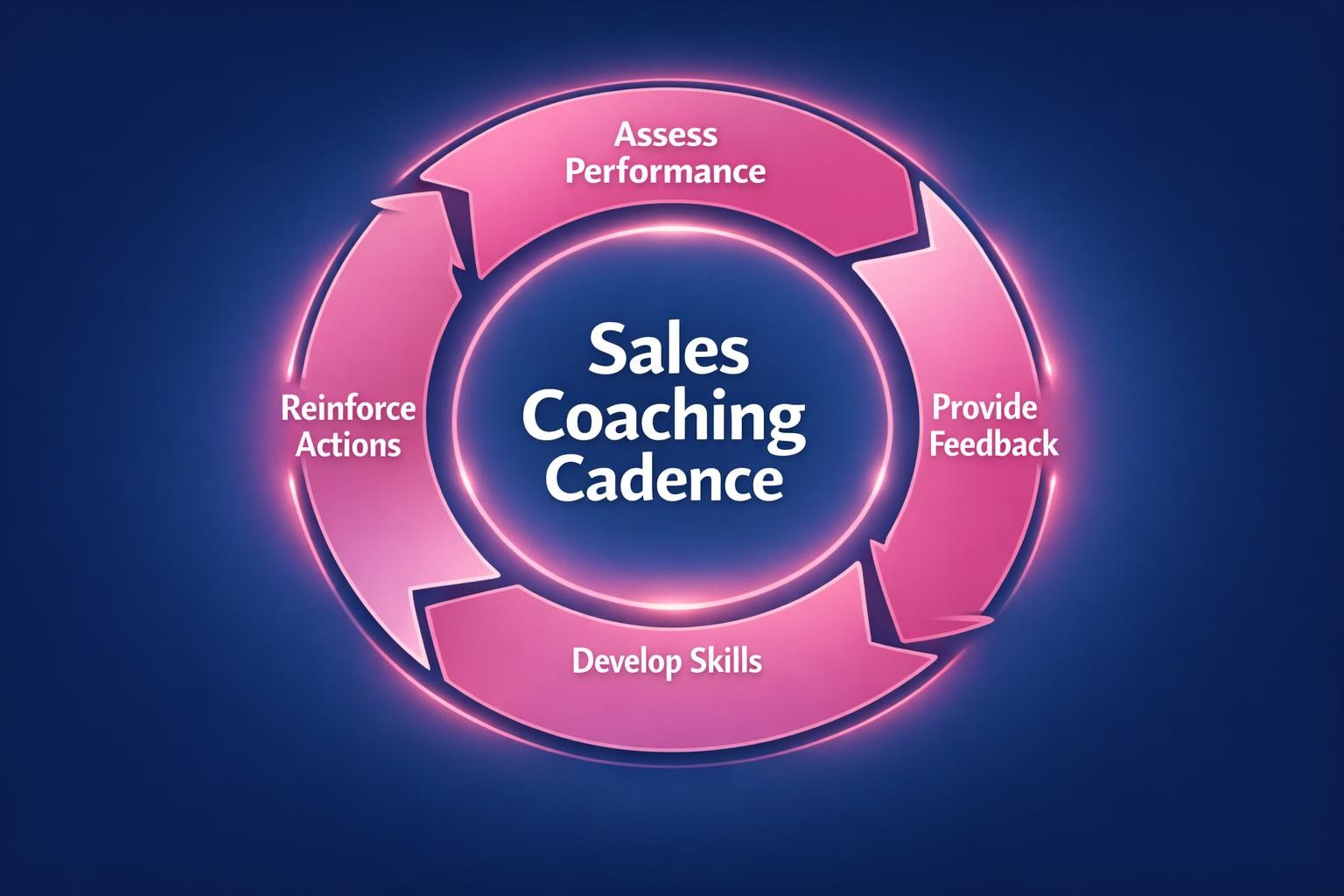
A sales coaching cadence requires ongoing ownership, documented review criteria and a process for learning from live opportunities and completed deals. This guide brings the supplied material together around five mistakes, an operating model and a review cycle.
Why a sales coaching cadence breaks down
The conventional approach to Sales Coaching Cadence in B2B sales is reactive rather than deliberate. Teams piece together a process from tribal knowledge, manager intuition, and whatever the previous playbook said.
Five sales coaching cadence mistakes
1. Treating coaching as a one-time initiative
A launch, workshop or new playbook can introduce a coaching approach, but ongoing ownership is still required after the initial initiative.
The correction: Assign a permanent owner to Sales Coaching Cadence outcomes. Build it into your operating cadence with standing review meetings, defined metrics, and quarterly improvement goals.
2. Relying on intuition alone
Review the available evidence across the portfolio rather than basing a decision only on recent or memorable opportunities.
The correction: When the data disagrees with the intuition, trust the data first and investigate the discrepancy. Record what the review finds before changing the process.
3. Building the relationship around one stakeholder
An opportunity centred on one contact lacks established coverage elsewhere in the buying group.
The correction: Map every stakeholder in the buying committee, assign coverage, and track engagement with each one. Include stakeholder coverage in opportunity reviews.
4. Confusing activity with progress
Calls, emails and tasks show that activity occurred, but activity counts alone do not document stage movement or buyer engagement.
The correction: Measure outcomes, not activities. Review stage progression, buyer engagement and stakeholder coverage. When activity and progress differ, examine the opportunity before requesting more activity.
5. Moving on without reviewing losses
A lost opportunity can be reviewed for recorded information about qualification, stakeholder coverage, objections and process execution.
The correction: Implement a structured loss review process. Document the findings and update playbooks accordingly.
Build the operating model
An operating model for Sales Coaching Cadence answers three questions: what actions should happen, at what stage, and who is accountable. Document clear milestones, documented criteria, and a shared vocabulary across the team.
Assign ownership
Someone on the leadership team is accountable for the outcomes, not just the activities. They set the goals, define the metrics, and ensure the approach evolves as market conditions change.
Document the process
The process that governs sales coaching cadence weekly must be documented, taught, and enforced. Managers can use the documented criteria as a shared basis for reviewing live opportunities. When demand exceeds available coaching hours, use a weekly sales manager coaching-capacity triage model to prioritize needs without letting urgency replace evidence.
To make that process usable week to week, start with these sales coaching templates for an evidence log, feedback form, action tracker, and review record. They keep the source observation, agreed behavior, owner, and follow-through connected without turning the cadence into another status meeting.
For a repeatable meeting inside that cadence, use the AI-assisted one-on-one sales coaching agenda to separate coaching from status review and move one evidence-backed issue into a specific action and follow-up.
Maintain the playbook
Use findings from deal reviews, recorded buyer feedback and CRM analysis to identify possible updates to qualification criteria, coaching prompts and stage expectations.
Seven practices for a repeatable coaching system
- Define expected execution. Document what excellent execution looks like at each stage of the deal.
- Track leading indicators. For Sales Coaching Cadence, leading indicators might include stakeholder engagement rates, content consumption, mutual action plan progression, or deal velocity at each stage.
- Use a weekly review. Make it a structured conversation about what needs to change in the next 7 days to improve outcomes.
- Coach live opportunities. Deal-specific coaching can include reviewing live opportunities with each rep and agreeing on the next action.
- Capture win-loss information. Gather it through post-deal interviews, CRM data analysis, and structured win-loss reviews.
- Align technology with the process. Technology should serve the sales coaching cadence weekly process, not define it.
- Create feedback loops. This can include reviewing Sales Coaching Cadence metrics quarterly against targets, updating playbooks when you learn something new, soliciting feedback from buyers on their experience.
Three-part explainer: Diagnose the gap, Coach and practice, and Measure and repeat.
Measure and review the cadence
Use leading and lagging indicators together. The supplied examples of leading indicators include stakeholder engagement, content consumption, mutual action plan progression and deal velocity. The supplied examples of lagging indicators include win rates, cycle times and average deal sizes.
Build a dashboard that shows both. Review it weekly. Tie it directly to coaching conversations and territory reviews.
The source describes Revspire Sales Coaching as surfacing deal-level data for review.
Start with an audit and review cycle
Start with an honest audit. Where is Sales Coaching Cadence working well today? Where is it breaking down? What does the data say versus what the narrative says?
Use the audit to select a focused set of changes. Deploy them with a clear owner, a measurable goal, and a 90-day review cadence.
At the review, compare the selected measures with the baseline, record what changed and revise the process where the available evidence supports doing so.
Three-part explainer: Expose the hidden cost, Build the business case, and Start where it matters.
Explore the next step
See how Revspire helps B2B revenue teams eliminate these patterns