The Complete 2026 Guide to Deal Room Analytics for Revenue Leaders
A practical perspective for connecting this idea to your revenue team’s next move.
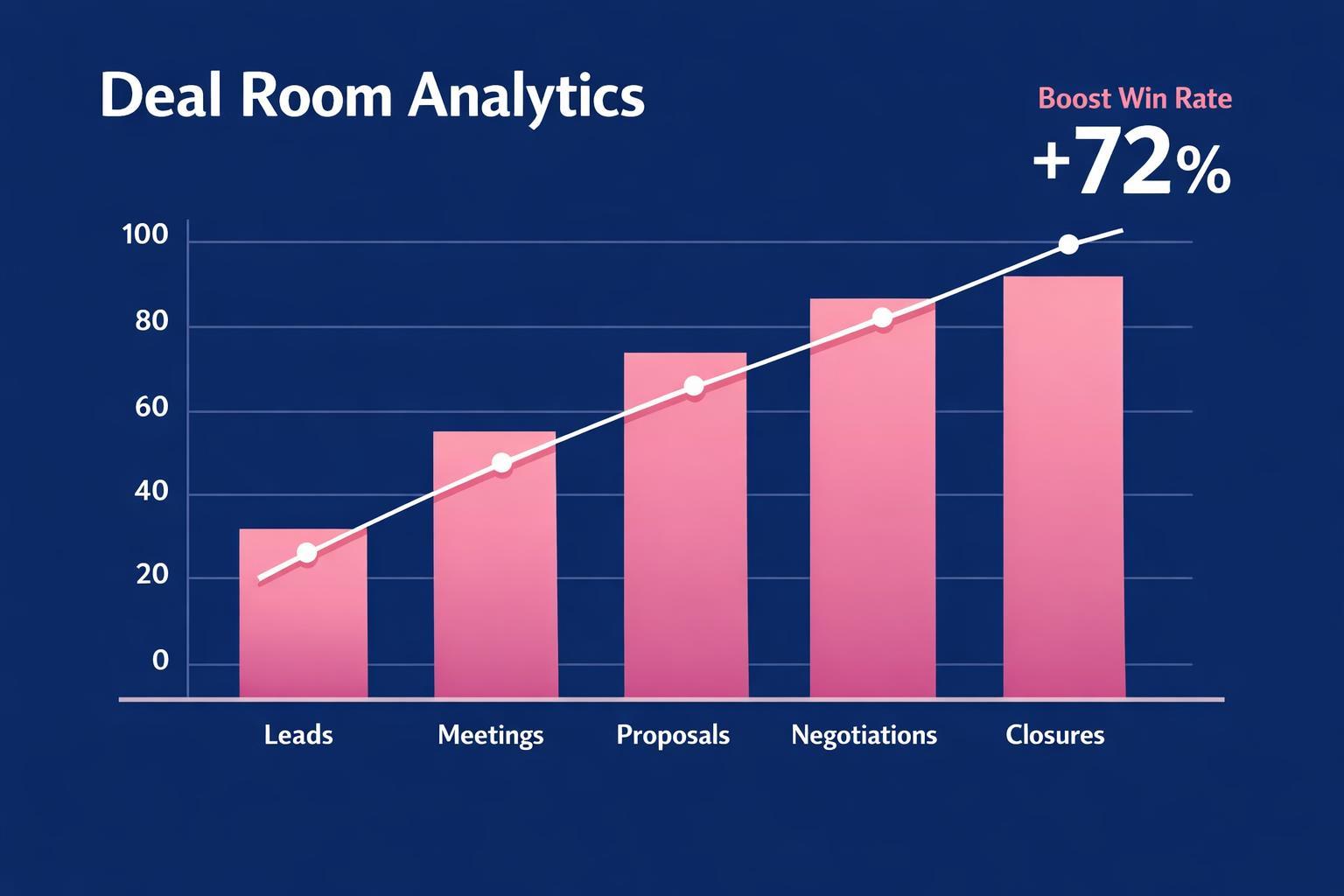
Deal room analytics works best as an ongoing operating discipline. Revenue leaders can make it practical by defining ownership, documenting the process, combining leading and lagging indicators, reviewing live opportunities, and applying lessons from completed deals.
Start with an honest audit
Start with an honest audit. Compare the available data with the team’s account of what is working and where execution is breaking down. Use the findings to select a small number of improvements, give each improvement a clear owner, and establish a review cadence.
Define the operating model
An operating model for Deal Room Analytics answers three questions: what actions should happen, at what stage, and who is accountable. Keep the model clear enough to guide pipeline reviews, coaching, and daily deal execution.
Assign ownership
Assign an accountable leader to set goals, define metrics, maintain the playbook, and coordinate reviews. Focus that responsibility on outcomes rather than activity totals alone.
Maintain a practical playbook
Document stage-specific milestones, stakeholder expectations, review criteria, and next actions. Treat the playbook as a living resource by updating it when win-loss reviews reveal a repeatable lesson.
Measure leading and lagging indicators
The right metrics for Deal Room Analytics sit at the intersection of leading and lagging indicators. Leading indicators might include stakeholder engagement rates, content consumption, mutual action plan progression, or deal velocity at each stage. Lagging indicators can include conversion rates, cycle time, and win rate.
Review both types together. Leading signals can help managers decide where an active opportunity needs attention, while lagging results show whether the broader approach is producing the intended outcomes.
Build analytics into the weekly cadence
Use pipeline reviews for structured conversations about what needs to change in active opportunities, not just status reporting. Deal-specific coaching can then focus on a live opportunity, identify where execution is breaking down, and work through the response with the representative.
Watch for common execution risks
Single-threaded stakeholder relationships
A relationship centered on one stakeholder can leave the deal without a fallback if that person disengages, changes roles, or leaves the company. Map relevant stakeholders, assign coverage, and review engagement across the group.
Activity without progress
High activity levels can mask a lack of forward momentum. Measure outcomes, not activities. Review stage progression, buyer engagement quality, and stakeholder coverage when deciding whether an opportunity is advancing.
Losses without review
Implement a structured loss review process. Examine significant lost deals for process, stakeholder, or engagement breakdowns, document useful findings, and apply those findings to the playbook and coaching process.
Create a continuous feedback loop
Review deal room analytics metrics against team goals and compare patterns from won and lost opportunities. Update the operating model when the evidence supports a change. This creates a repeatable connection between measurement, coaching, and process improvement.
Three-part explainer: Expose the hidden cost, Build the business case, and Start where it matters.
Align technology with the process
Technology should serve the deal room engagement analytics process, not define it. Evaluate whether a tool makes the operating model easier to follow and provides relevant deal signals. Revspire Deal Rooms surfaces deal-level data that gives leaders an objective view across opportunities.
Implementation checklist
- Audit the current process and identify specific breakdowns.
- Define stage-specific actions and accountability.
- Assign an owner for outcomes, metrics, and playbook maintenance.
- Select leading and lagging indicators.
- Include active-deal analysis in weekly pipeline reviews.
- Use deal-specific coaching to address execution gaps.
- Review stakeholder coverage and forward movement.
- Capture findings from won and lost deals.
- Update the operating model as evidence accumulates.
Ready to discuss your deal room analytics approach? Talk to Revspire.